
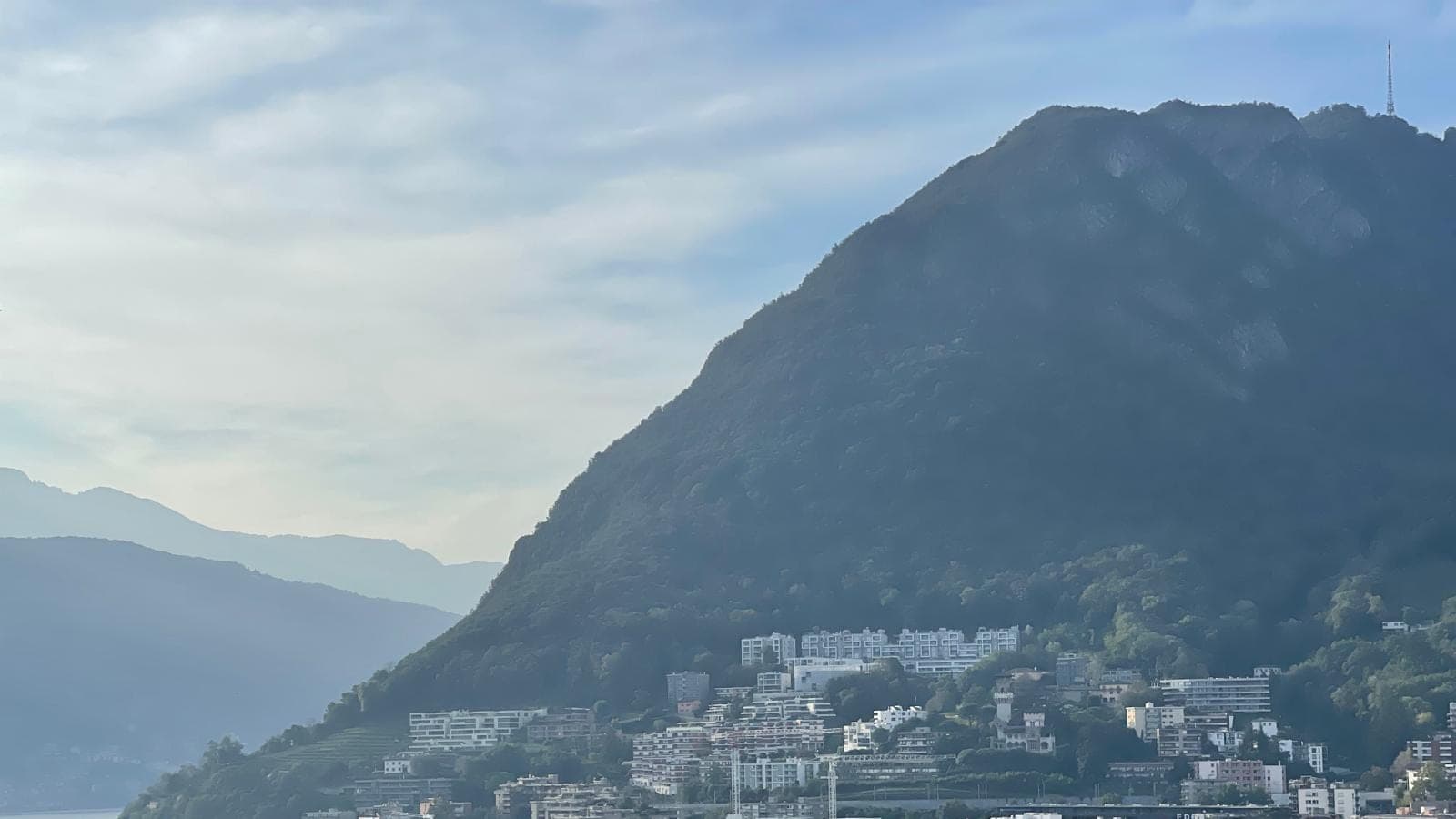
Every August, the lakeside town of Locarno turns its main square into one of the largest open-air cinemas in the world. For eleven nights, an 8,000-seat Piazza Grande sits beneath a screen twenty-six metres wide, and the Pardo d'Oro -- the Golden Leopard -- is decided a few steps from the water of Lake Maggiore. The 79th edition runs from 5 to 15 August 2026.
Ticino rewards those who arrive unhurried. The canton sits on the Italian side of the Alps, reached over the Gotthard from the north or across the border from Milan to the south, and the festival fills its hotels and lakefront fast. This guide is written from the front seat: how to reach Locarno cleanly, how the Piazza Grande evening actually works, and how a chauffeur turns the cross-border logistics into the easy part of the trip.
The festival in brief
Founded in 1946, Locarno is one of the oldest film festivals in the world, in the same conversation as Cannes and Venice. Its signature is the Piazza Grande screening: each evening the square fills, the lights drop, and a single film plays on a screen measuring twenty-six by fourteen metres -- among the largest open-air screens anywhere.
The top prize is the Pardo d'Oro, the Golden Leopard, awarded to the best film in the international competition. Around it sit the competitive and retrospective strands that draw directors, jurors and a discerning international audience to a town of fewer than sixteen thousand residents. For ten days, Ticino becomes the centre of art-house cinema.
Reaching Ticino: the three gateways
Locarno has no major airport of its own. Three approaches make sense depending on where your flight lands, and each has a different character.
From the north, Zurich is the natural Swiss gateway: a drive of roughly 230 kilometres over the Gotthard, with the Base Tunnel cutting straight under the Alps and the southern slope opening onto palm trees and Mediterranean light. From the south, Milan-Malpensa is the closest international hub -- around 90 kilometres -- but the route crosses the Italian-Swiss border, which is best handled by a driver who does it regularly. Lugano-Agno airfield, suited to lighter private aircraft, sits about 40 kilometres away and is the shortest transfer of the three.
| Route | Distance | Note |
|---|---|---|
| Zurich Airport to Locarno | ~230 km | Over the Gotthard; scenic alpine crossing |
| Milan-Malpensa to Locarno | ~90 km | Cross-border; passport at hand |
| Lugano-Agno to Locarno | ~40 km | Shortest transfer; private aviation |
The cross-border run from Milan
For guests flying in from Italy or connecting through Milan, Malpensa is the practical choice -- closer to Locarno than Zurich and well served by long-haul traffic. The catch is the frontier. The road from Malpensa skirts the Italian shore of Lake Maggiore before crossing into Switzerland near the lake's northern end, and during festival week the border can move slowly.
A chauffeur who works the Ticino corridor knows the quieter crossing points and the timing that avoids the worst of it. Keep your passport or ID within reach rather than in checked luggage; the formalities are light but they exist. Done well, the cross-border leg is simply ninety minutes of Lake Maggiore scenery with a coffee stop, not a queue.
Over the Gotthard from Zurich
Arriving from Zurich is the most Swiss of the three approaches, and for many guests the most beautiful. The motorway runs south through Zug and Arth-Goldau before the landscape tightens into the Gotthard. The Base Tunnel takes you under the massif in minutes; the old pass road over the top, weather permitting, is one of the great alpine drives if time allows.
On the southern side the climate changes within a few kilometres -- the air softens, the architecture turns Italianate, and Bellinzona's castles announce that you have crossed into Ticino. Budget around three hours door to door, longer if you want the pass and a lakeside lunch. It is the kind of transfer where the journey is part of the holiday, not a deduction from it.
The Piazza Grande by night
The evening screening is the heart of Locarno, and it has its own rhythm. The square fills well before dusk; the film begins once the light has fully gone, usually after nine-thirty in August. With more than eight thousand seats and a town built for a fraction of that crowd, the streets around the Piazza Grande close to traffic and parking near the centre evaporates.
This is where a chauffeur earns the fee. Rather than circling for a space that will not appear, you are set down a short, dignified walk from the square and collected at a pre-agreed point once the credits roll and the crowd spills back into the lanes. No hunt for the car in the dark, no negotiating closed streets -- just a quiet drive back to the lake after the lights come up.
Lake Maggiore and the days between screenings
Locarno is small; the pleasure of the festival is as much the setting as the cinema. Lake Maggiore stretches south across the Italian border, and the surrounding Ticino is built for the slow hours between films. Ascona, the next town along the shore, has a waterfront promenade and a cluster of galleries. The Brissago Islands, with their botanical garden, sit a short boat ride out.
Higher up, the Verzasca and Maggia valleys offer cool water and stone hamlets within half an hour of town. A chauffeur lets you treat these as easy afternoon excursions -- out to a valley for lunch, back in time to change before the Piazza Grande -- without rental-car logistics or the question of who is driving home afterwards.
Where to stay
Festival week stretches Locarno's hotel stock, so book early. Among the suggested addresses, the Belvedere and the Hotel Villa Orselina sit above the town with lake views; for a quieter base, the lakeside resorts around Ascona offer space and a short drive into the centre. Some guests prefer to stay in Lugano, forty minutes south, and treat each screening as an evening transfer.
Wherever you settle, the practical point is the same: during the festival, having a car and driver on call matters more than proximity to the square, because the square itself is closed to traffic when it counts. A suggested hotel paired with a standing chauffeur arrangement is the combination that works.
Choosing the vehicle
The right car depends on party size and luggage. A Mercedes E-Class suits one or two guests travelling light; the S-Class adds presence and rear-seat comfort for the longer Gotthard or Malpensa legs. For families or small groups, the V-Class carries up to seven in comfort, and a Sprinter handles larger parties or production crews with equipment. All prices below are estimates to confirm at the time of booking.
| Vehicle | Best for | Local (<=25 km) | Per km | Per hour |
|---|---|---|---|---|
| Mercedes E-Class | 1-2 guests, light luggage | CHF 140 | CHF 3.5 | CHF 100 |
| Mercedes S-Class | Presence, long transfers | CHF 180 | CHF 4.5 | CHF 140 |
| Mercedes V-Class | Up to 7 guests | CHF 160 | CHF 4.5 | CHF 130 |
| Mercedes Sprinter | Groups, crews, equipment | CHF 350 | CHF 6 | CHF 180 |
Frequently asked questions
The 79th edition runs from 5 to 15 August 2026, in and around the Piazza Grande in Locarno, Ticino.
It depends on your flight. Milan-Malpensa is the closest international hub at around 90 kilometres but involves a border crossing. Zurich is roughly 230 kilometres over the Gotthard and keeps you within Switzerland. Lugano-Agno, about 40 kilometres away, suits private aviation.
As a guide, a one-way S-Class transfer over the roughly 230-kilometre Gotthard route is calculated on a per-kilometre basis (around CHF 4.5/km) plus any waiting time. We confirm a firm figure against your itinerary -- all amounts shown are estimates to confirm.
Not when it's handled by a chauffeur who runs the Ticino corridor regularly. Keep your passport or ID to hand rather than in checked luggage. The formalities are light, and the drive is around ninety minutes along Lake Maggiore.
Yes. The streets around the square close to traffic during screenings, so we set you down a short walk away and collect you at a pre-agreed point once the film ends -- no parking hunt in the dark.
Yes. Many guests arrange a car on call for the duration -- evening transfers to the Piazza Grande plus daytime excursions around Lake Maggiore and the Ticino valleys. We tailor the arrangement to your programme.